Website Architecture & International SEO - Pitfalls & Best Practices in The Hotel Sector


In the hotel sector, website architecture and international SEO is rarely a simple matter of building a website and ensuring its pages are translated. Hotel brands often operate across multiple countries, regions, and languages, while attempting to maintain a single, authoritative root domain. This creates a complex digital ecosystem in which websites must balance language variations, localised content, how to organise individual hotels, and user intent to drive bookings without fragmenting overall SEO performance. Brands that successfully navigate this complexity are well placed to distribute link equity effectively across their target markets and locations, while simultaneously delivering a seamless user experience that drives conversions.
Achieving this, however, is far from straightforward. Managing multiple language options alongside numerous destinations introduces significant challenges around site structure, URL hierarchy, and content duplication. Decisions about whether to organise content by language, by location, or through a hybrid approach have direct implications for crawlability, indexation, and usability. When hreflang annotations are added to the equation, the margin for error increases further; incorrect implementation can confuse search engines, dilute ranking signals, or result in the wrong pages being served to the wrong audiences.
The hotel industry is also one in which growth and expansion are common. New hotel openings or acquisitions often bring standalone websites that must be integrated into an existing domain structure, frequently inheriting legacy SEO issues and architectural constraints that complicate international strategies even further. Brands may also decide to enter markets after already becoming established which presents a separate set of complexities.
This post explores the most common pitfalls in international SEO for hotels and outlines best practices for hreflang implementation, multilingual and multi-location site structures, whilst maintaining a consistent, scalable framework that supports both global visibility and local relevance.
Approach 1: moxy-hotels.marriott.com - A root domain with language subfolders, where bookings are made by directing users to the root domain of the parent site, marriott.com

⬇
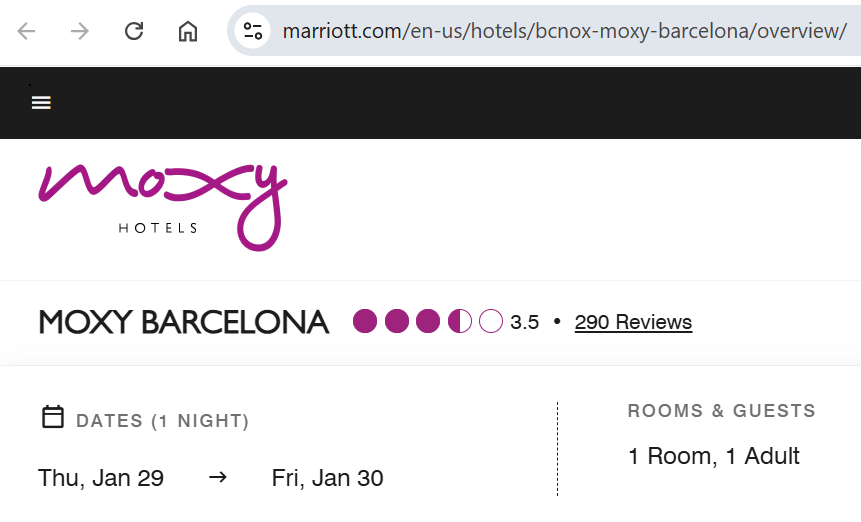
In this model, individual hotel brand sites operate on a single root domain with language-based subfolders (for example, moxyhotels.com/en/ or moxyhotels.com/es/), while the booking journey itself is handled on the parent brand’s root domain, such as marriott.com. A user browsing the Moxy Barcelona hotel in Spanish may therefore engage with localised content on the Moxy site, but is redirected to a Marriott booking page to complete their reservation.
This approach reflects how large hotel groups balance brand differentiation with operational efficiency, but it introduces several important SEO and user-experience considerations and of course, is only possible for brands that have a parent company.
Advantages
Consolidation of booking authority and trust
Routing bookings through the parent domain leverages the strong authority, brand recognition, and user trust associated with marriott.com. From a conversion perspective, this can be advantageous: users may feel more confident completing a transaction on a globally recognised platform with established loyalty programmes, payment systems, and customer support.
Reduced technical complexity for sub-brand sites
The Moxy site can focus on inspiration, brand storytelling, and hotel-specific content without needing to support the full technical overhead of a booking platform in multiple languages and currencies. This separation of concerns can reduce development and maintenance costs.
Shared link equity benefits indirectly
While the booking pages live on the parent domain, internal linking from brand sites like Moxy helps reinforce Marriott’s authority for transactional hotel queries, strengthening the ecosystem as a whole.
Disadvantages
Breaks in SEO and conversion continuity
From an SEO perspective, authority built by the Moxy site does not directly benefit the booking URLs on marriott.com. The redirect or handoff between domains creates a break in the journey, meaning organic visibility gained by the hotel’s brand pages may not fully translate into ranking strength for the booking pages themselves.
Hreflang and language alignment challenges
This model introduces complexity when language versions do not map cleanly between domains. A user entering the Spanish version of the Moxy Barcelona page may be redirected to a default-language or geo-targeted Marriott booking page, creating inconsistency. If hreflang annotations are not perfectly aligned across both domains, search engines may struggle to understand language and regional relationships, increasing the risk of incorrect page delivery. Moxy handle this correctly but it adds an additional layer of complexity for brands looking to adopt a similar model
User experience friction and potential trust loss
Although Marriott is a strong parent brand, switching domains during the booking process can feel abrupt, particularly for users who are not already familiar with the brand hierarchy. Whilst some users may feel more comfortable completing their booking on a brand as established as Marriott, for others, differences in navigation, design, or language handling between Moxy and Marriott can reduce perceived cohesion and negatively impact conversion rates.
Limited flexibility for local SEO optimisation
Booking pages on the parent domain may prioritise global consistency over local nuance. This can restrict the ability to tailor on-page content, internal linking, or structured data specifically for individual hotels or markets, potentially limiting performance for high-intent local search queries.
Key consideration for hotel groups
For international hotel groups like Marriott, this approach prioritises operational efficiency and brand consolidation over pure SEO continuity. While it can perform well when brand trust is high and technical execution is strong, it requires careful coordination between sub-brand sites and the parent domain, particularly around hreflang, language handling, and analytics, to avoid undermining both visibility and user experience. A more consistent approach can be seen with Choice Hotels
Approach 2: choicehotels.com - Languages and Locations Managed by Subfolders & Bookings Made Direct on Site
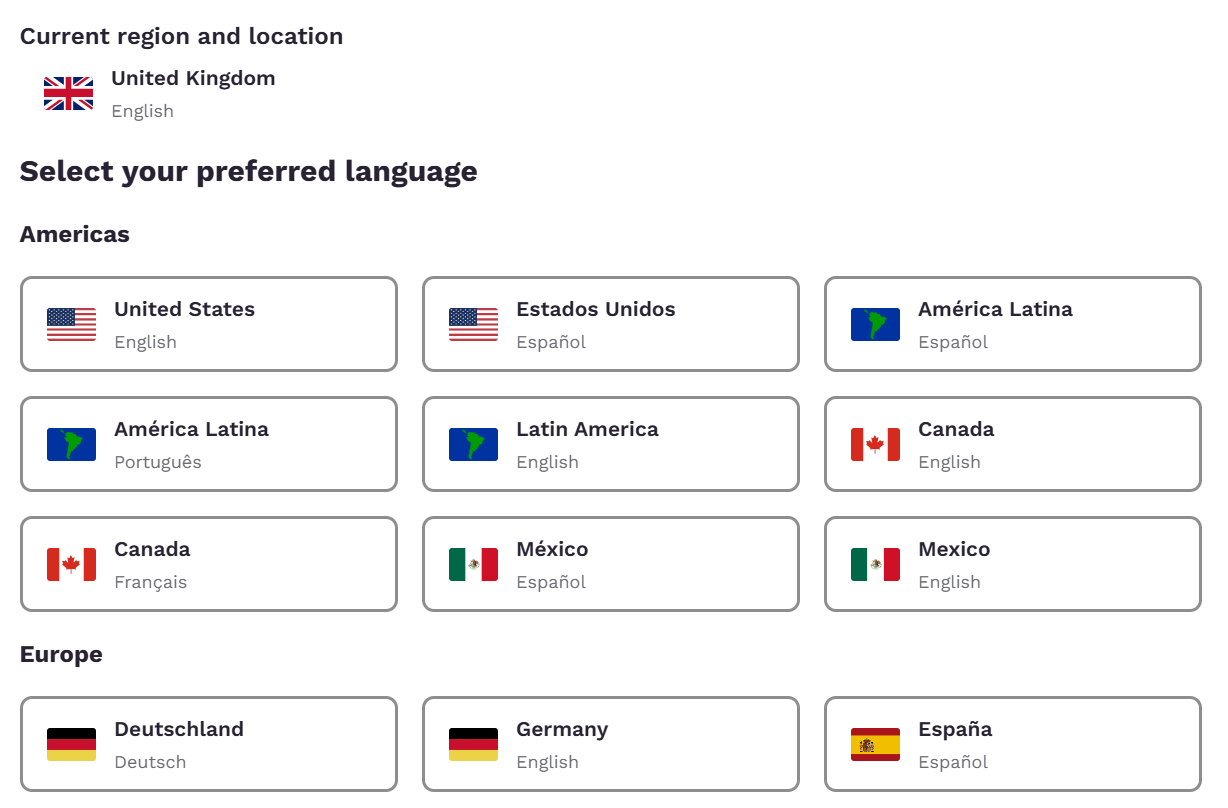
Choice Hotels demonstrates a strong approach to managing language and location diversity by structuring its website around country-specific subfolders, each tailored to a particular market while remaining part of a single global brand. For example, users accessing the site from the United States are served an English (U.S.) experience, while Canadian users can choose between English (Canada) and French (Canada). Visitors in other regions are presented with localized languages, currencies, offers, and content relevant to their country. These versions are typically managed through subfolders (such as /us/, /ca/, etc.), allowing Choice Hotels to adapt spelling, terminology, promotions, hotel availability, and legal information without fragmenting the brand across multiple domains.
The benefits of this approach are significant. From a user experience perspective, the site feels local and trustworthy, reducing friction in the booking journey and supporting higher conversion rates. From an SEO and technical standpoint, the use of subfolders consolidates domain authority and organic equity under one root domain, rather than diluting it across multiple country-specific websites. This structure also simplifies site maintenance, analytics, and governance, while ensuring brand consistency across markets and retaining the flexibility to localize content where it matters most.
Hreflang implementation across the site is comprehensive and technically sound, ensuring that search engines clearly understand the relationship between language and regional versions of each page and serve the correct version to the appropriate audience. In addition, individual hotels benefit from dedicated booking functionalitydirectly on the root domain, enabling users to complete bookings without being redirected to third-party operators or parent company sites.
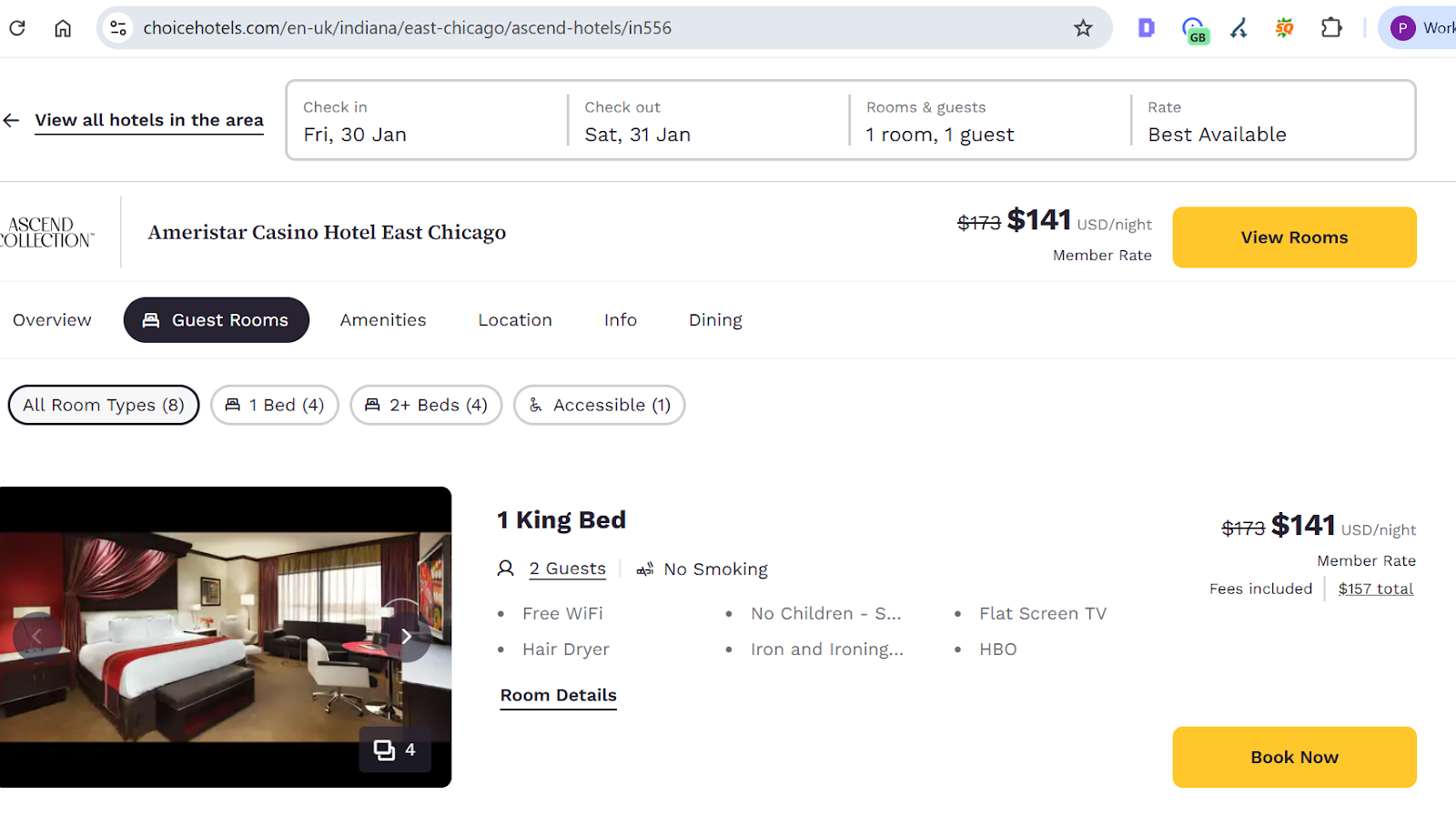
Overall, Choice Hotels provides a strong example of how to balance website architecture with international SEO best practices to provide a seamless user experience, successfully supporting both global scale and local relevance.
A website with a similar offering that could take inspiration from Choice Hotel’s streamlined international SEO efforts is Mama Shelter
Approach 3: mamashelter.com - Locations Managed by Subfolder and Languages Managed by Subdomains
The Mama Shelter root domain encourages users to “Choose your Mama,” referring to its various hotel location pages.

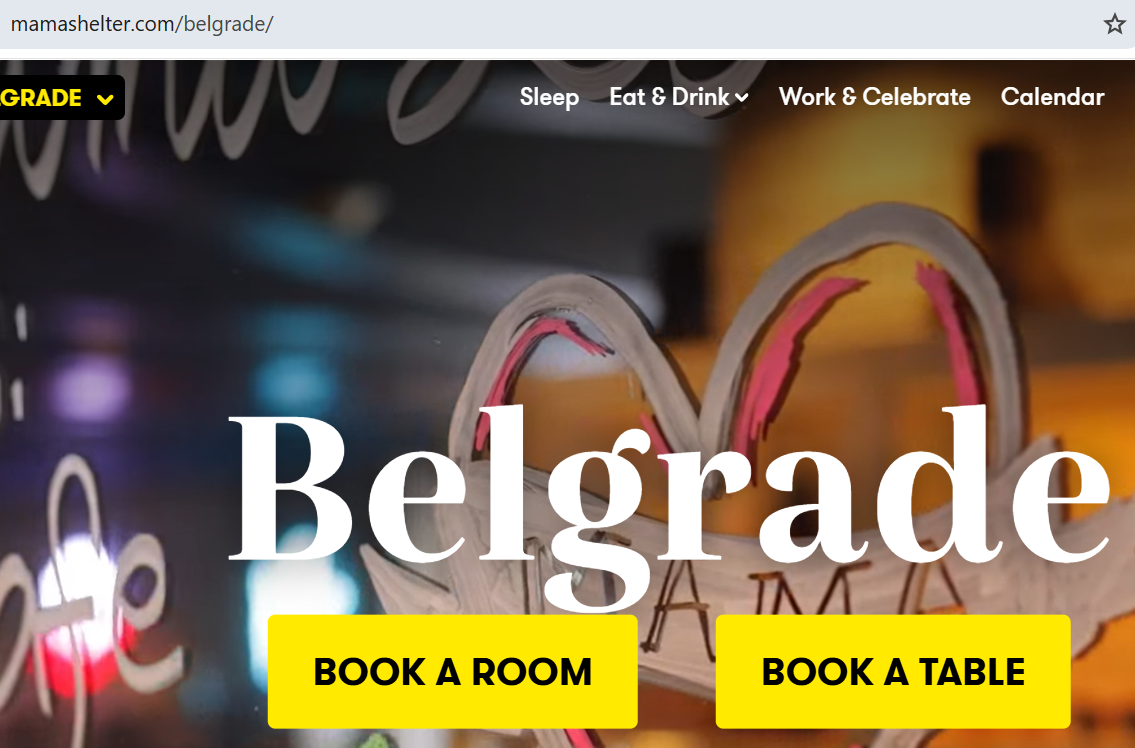
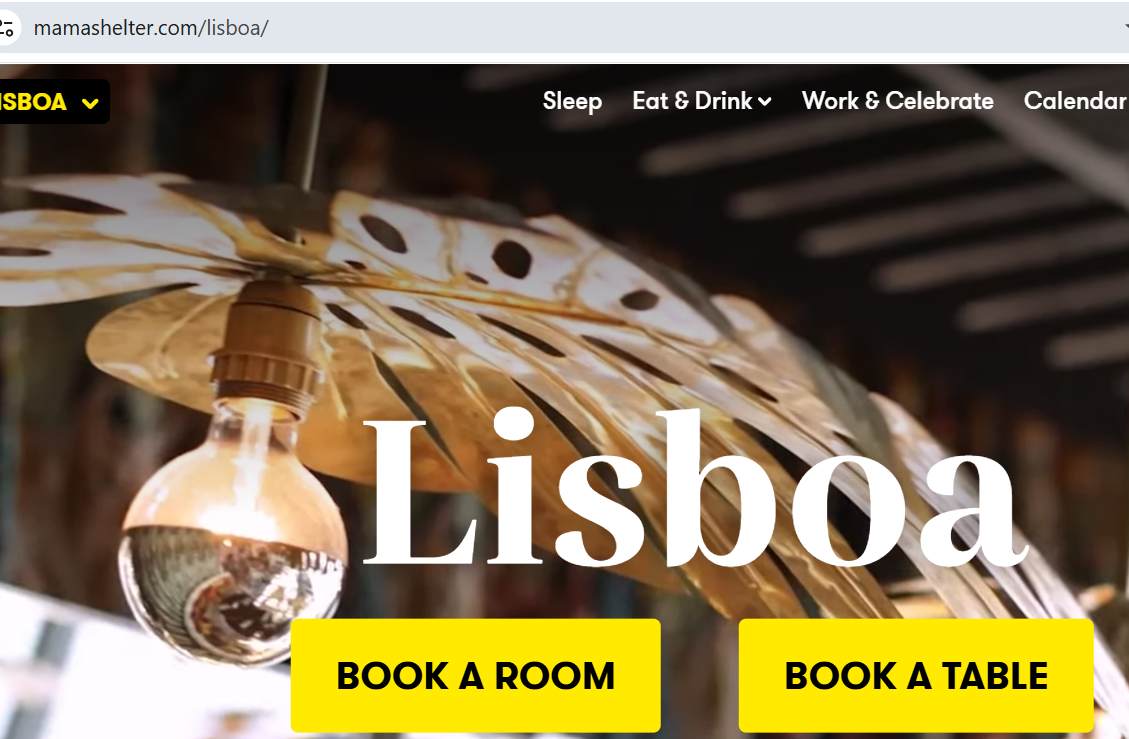
Selecting Belgrade directs users to https://mamashelter.com/belgrade/, while Lisboa resolves to https://mamashelter.com/lisboa/. These location pages are consistently implemented as clean, indexable subfolders on the root domain, which is a sound and scalable approach for managing location-based content.
Belgrade
Lisboa
While an alternative URL structure such as https://mamashelter.com/destination/belgrade might appear logical from a conceptual hierarchy perspective, this is not currently supported by the site’s technical implementation. The “Destination” element visible on the homepage exists only as a hash fragment (#destination), which is used for client-side navigation and JavaScript behaviour. Hash fragments are not sent to the server, are not crawlable or indexable by search engines, and therefore do not represent a true parent directory that location pages could logically sit beneath.

What Mama Shelter Do Well
From a structural standpoint, the website is consistent in its use of subfolders to manage different hotel locations. It avoids mixing ccTLDs, subdomains, and subdirectories for the different hotels, which helps maintain clear and consolidated SEO signals. Although some individual location pages (for example, Dijon in France) appear to experience performance or loading issues, these are execution-related problems rather than structural inconsistencies in the URL architecture.
What Could Be Improved
Issues arise when users switch languages on the site. Language selection can lead to parameter-heavy URLs on language subdomains, such as, the following when Italy is selected:
These URLs are polluted with tracking parameters, are not canonical versions of the corresponding language pages, and are unsuitable for indexing. While search engines can technically crawl such URLs, they should not be indexed and it is problematic that they load instead of the canonical versions, such as: https://it.mamashelter.com/
The underlying issue is not necessarily the use of subfolders for locations alongside subdomains or subdirectories for language variants, as this is a valid international SEO setup when implemented correctly. Rather, the problem lies in how the language-switching implementation has been implemented , which introduces non-canonical, parameterised URLs which causes issues around inconsistent canonicalisation usage, hreflang signalling, and internal linking.
As a result, the current setup makes correct international SEO maintenance more complex than it needs to be and increases the likelihood of signal dilution, even though the core location-based URL structure is fundamentally sound.
A hotel chain does not have to be international however to end up with a fragmented approach to organising their different locations as can be seen in the case of The Signet Collection.
Approach 4: signet.ltd - The Signet Collection: Locations All Exist On Separate Domains
The Signet root domain allows users and search engines to navigate to the different hotels where bookings are made.
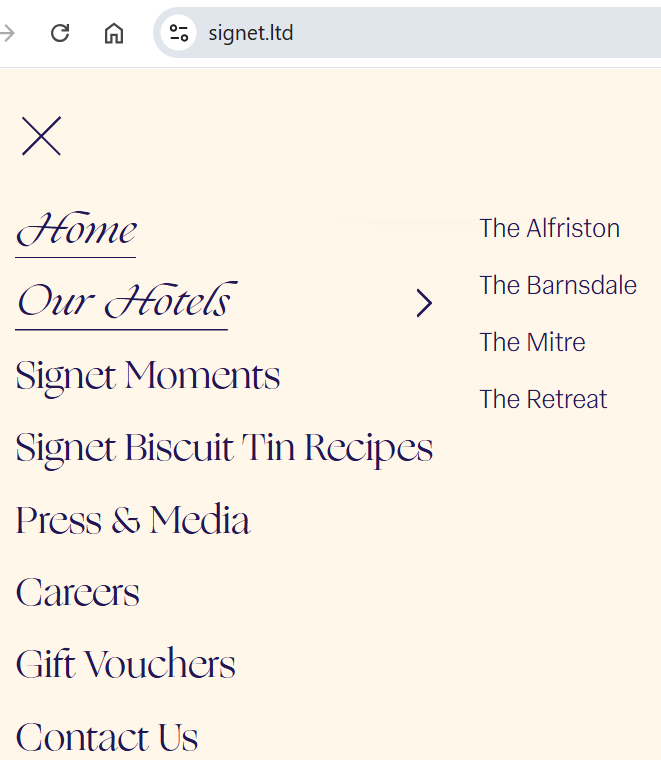
The other examples we have looked at organise this functionality through pages managed within subfolders, meaning that link equity is consolidated and distributed more evenly across the domain. This approach also allows the website’s content, internal linking strategy, and target keywords to be managed from a single, coherent architecture, reducing the risk of fragmented SEO signals and making ongoing optimisation, governance, and scalability significantly easier to maintain.
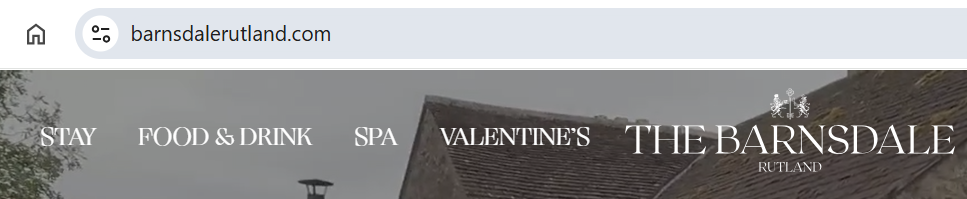
Signet manage this differently however with each of their individual hotels, existing on their own domain:
thealfriston.com
barnsdalerutland.com
https://mitrehamptoncourt.com/
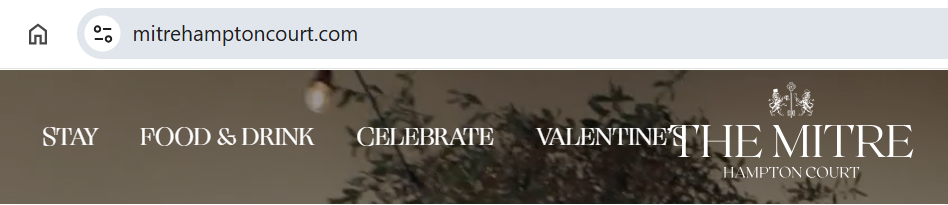
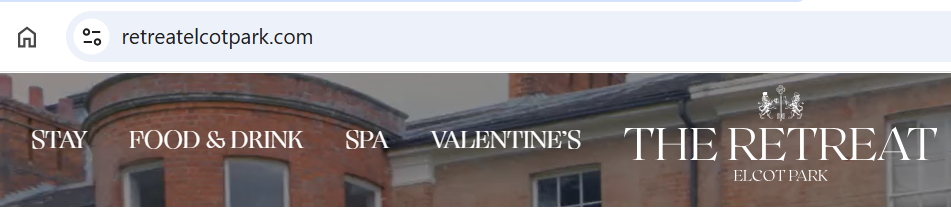
This approach offers a number of immediate benefits, particularly in terms of brand autonomy and flexibility. Each hotel is able to present a distinct identity, tailor its messaging and content to a specific audience, and operate without structural constraints imposed by a centralised domain. And whilst this isn’t being taken advantage of by The Signet Collection, evidenced by the uniformed structure, imagery and identity used on each domain, in theory a more tailored approach can create a more focused and immersive brand experience, particularly for destination-led or luxury properties.
However, while this decentralised model introduces certain strategic advantages, it also fundamentally alters how authority, link equity, and organic visibility are built and sustained, an area where longer-term trade-offs begin to emerge.
In the case of The Signet collection, it looks as though the hotels existed as separate entities with their own root domains before they were consolidated into the Signet brand, because each has a stronger backlink profile than the website of the parent company.
Whilst this may appear to be a sensible approach for safeguarding rankings and link equity, it actually represents short-term thinking as, if the same links were consolidated under a single domain, the total authority would be higher. It would also mean any new hotels added to the collection would rank faster (even with a weaker backlink profile of their own), long-tail and informational content would perform better and internal linking could be used strategically with more success when looking to distribute value to pages we are targeting. In short, four strong small sites do not have the authority or flexibility of one strong scalable platform.
How Could The Signet Collection Improve Their Website Architecture?
To move towards a more scalable and SEO-efficient website architecture, The Signet Collection would need to consolidate its individual hotel websites into a single primary domain rather than across multiple standalone sites. This would allow authority, relevance and crawl equity to be built and shared at a group level, rather than fragmented across separate domains.
A unified architecture through subfolders, would enable each hotel to retain its own clearly defined presence, while benefiting from shared domain strength. Individual properties should be structured as the following:
- signetcollection.com/hotels/the-alfriston
- signetcollection.com/hotels/barnsdale-rutland
- signetcollection.com/hotels/mitre-hampton-court
- signetcollection.com/hotels/retreatcotpark
A comprehensive redirect strategy would be required in order to ensure this was done without losing any organic visibility meaning every indexable URL on the individual hotel domains would be redirected to its new equivalent location on the group domain. Redirects would also need to be supported by updated canonical tags, internal links, XML sitemaps and navigation structures to reinforce the new architecture.
Prior to launch, each migrated section would require full technical validation, including crawl testing, redirect verification, indexability checks, and performance benchmarking. Post-migration, ongoing monitoring would be essential to identify and resolve issues such as orphaned URLs, broken redirects, internal redirects traffic drops, or ranking volatility.
While this type of migration carries short-term risk and requires careful coordination across technical, content, and brand teams, it would ultimately allow The Signet Collection to consolidate authority at a group level. Over time, this would enable more efficient distribution of link equity, faster organic growth for new properties, and a significantly more maintainable SEO foundation than the current fragmented domain setup.
Conclusion
Across the hotel sector, international and multi-location SEO success is driven less by the number of markets or properties a brand operates in, and more by the clarity and consistency of its underlying website architecture. As the examples explored demonstrate, approaches that consolidate locations and languages within a single, well-structured domain provide clearer SEO signals, more efficient distribution of link equity, and a stronger foundation for scalable growth.
Conversely, fragmented architectures, whether caused by cross-domain booking journeys, inconsistent language handling, or standalone hotel websites, introduce unnecessary complexity, dilute authority, and increase long-term maintenance risk. As the example of The Signet Collection shows, even when International SEO is not a factor, brands can find themselves operating across five domains, each with their own issues and complexity, rather than one centralised structure. While such models can work under specific conditions, they require significantly higher levels of technical precision and governance to avoid undermining organic performance.
Ultimately, hotel brands that prioritise consolidation, clean URL hierarchies, and technically sound internationalisation are better positioned to balance global visibility with local relevance, supporting both discoverability and conversion as their portfolios grow.
With expertise in translations, technical SEO and website development, here at ICS-Digital, we are uniquely positioned to advise businesses in the hotel industry on how to navigate the complexities of website architecture and internationalisation.
Similar Posts


.jpg)